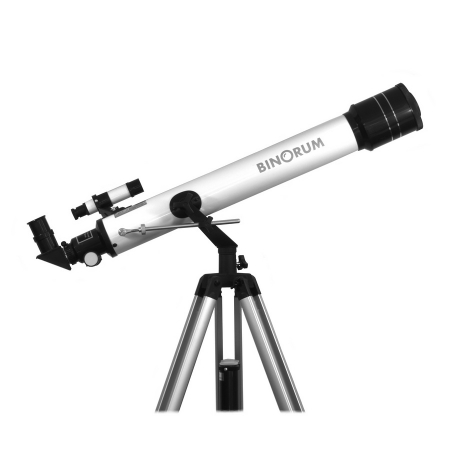
Binorum Plössl 3.6mm 43° 1.25″ Ultra High Power Planetary Eyepiece
Exceptional value in ultra-short focal length eyepieces for extreme magnification astronomy. The Binorum Plössl 3.6mm represents one of the most affordable yet high-quality ultra-short focal length Plössl eyepieces available on the market. Designed specifically for very high magnification observation of the Moon, planets, and splitting tight double stars, this eyepiece delivers outstanding optical performance that rivals far more expensive alternatives.
Specialized Tool for Extreme Magnification
With its extremely short 3.6mm focal length, this eyepiece is a specialist designed for pushing your telescope to its maximum useful magnification. This is not an everyday eyepiece – it's a precision instrument for those special observing nights when atmospheric conditions are exceptional and you want to extract every last detail from planetary surfaces, lunar features, and challenging double star systems.
The 43° apparent field of view is optimized for high-power observation, providing a focused viewing experience that helps you concentrate on fine details without the distractions of a wider field. This narrower field is actually advantageous at extreme magnifications, where tracking becomes more critical and every degree of field width requires proportionally more optical quality to maintain sharpness.
Versatile Compatibility Across Telescope Types
One of the remarkable features of the Binorum Plössl 3.6mm is its versatility – it can be used with virtually any type of telescope. Whether you own a refractor, reflector, or catadioptric telescope, this eyepiece's standard 1.25″ barrel ensures perfect compatibility. The exceptional price-to-performance ratio makes it accessible for amateur astronomers at all levels who want to explore high-magnification astronomy without significant investment.
Premium Optical Features
Blackened lens edges effectively suppress internal reflections and stray light, a critical feature when pushing magnification to extreme levels. At high powers, even minor internal reflections can significantly degrade contrast and obscure subtle planetary details. The anti-reflection treatment ensures maximum contrast when observing bright objects like the Moon and planets, revealing delicate features that might otherwise be lost in scattered light.
The comfortable eyecup provides effective shielding from peripheral light sources, helping you maintain concentration during demanding high-magnification observing sessions. This protection from stray light is particularly important when observing from light-polluted locations or when the Moon is in the sky, as it helps preserve the contrast needed to see fine planetary details.
Important Consideration: Eye Relief
Please note: The eye relief of this eyepiece is very short, which is typical and unavoidable for Plössl designs at this focal length. This short eye relief will significantly limit usability for eyeglass wearers. If you must wear glasses while observing (typically required only for astigmatism correction), this eyepiece may not provide a comfortable viewing experience, as you will not be able to see the full field of view.
For observers who do not require eyeglasses, or who only use glasses for general myopia or hyperopia (which can be compensated by the telescope's focuser), this eyepiece will perform exceptionally well. The short eye relief becomes less of a concern when you can position your eye close to the lens.
Ideal Applications
The 3.6mm focal length positions this eyepiece as the ultimate specialist for extreme high-power work:
- Lunar Detail Observation: Reveals the finest crater details, central peaks, terraced walls, rilles, and wrinkle ridges. Perfect for studying the lunar terminator where low sun angles create dramatic shadows that enhance surface relief
- Planetary Surface Features: Excellent for observing Jupiter's finest cloud details, festoons, and turbulent regions in the Great Red Spot; Saturn's atmospheric bands and subtle details in the Cassini Division; Mars' polar caps, dark albedo features, and occasional dust storms
- Planetary Satellites: The high magnification helps separate Jupiter's Galilean moons from the planet's disk and may reveal the shadow transits of these moons across Jupiter's cloud tops
- Challenging Double Stars: Provides the magnification necessary to split very close binary systems and resolve color differences between components. Essential for testing your telescope's resolution and atmospheric seeing conditions
- Planetary Nebulae: Reveals structural details in compact planetary nebulae and helps distinguish them from stars
Magnification Examples
To calculate magnification, divide your telescope's focal length by 3.6mm:
- 600mm telescope = 167x magnification
- 700mm telescope = 194x magnification
- 900mm telescope = 250x magnification
- 1200mm telescope = 333x magnification
- 1500mm telescope = 417x magnification
- 2000mm telescope = 556x magnification
These magnifications approach or exceed the theoretical maximum useful magnification for many telescopes (typically 50x per inch of aperture, or 2x per millimeter). Use this eyepiece only when atmospheric conditions are excellent, with steady, calm air that allows fine details to remain sharp and stable.
Technical Specifications
| Model |
Binorum Plössl 3.6mm |
| Optical Design |
4-element Plössl (symmetrical achromatic doublets) |
| Focal Length |
3.6 mm |
| Apparent Field of View |
43° |
| Barrel Diameter |
1.25″ (31.7 mm) |
| Eye Relief |
Approximately 2.9 mm (very short) |
| Lens Edge Treatment |
Blackened edges for stray light suppression |
| Eyecup |
Rubber fold-down eyecup |
| Barrel Threading |
Standard filter threads (M28.5 x 0.6) |
| Optical Coatings |
Fully multi-coated optics |
| Housing Material |
Metal barrel with matte black finish |
| Best For |
Extreme high power lunar and planetary observation, tight double stars |
| Recommended For |
Observers who do not require eyeglasses during observation |
| Compatible With |
All telescopes with 1.25″ focusers |
Atmospheric Conditions Matter
At the extreme magnifications this eyepiece provides, atmospheric seeing becomes the limiting factor in image quality. Even the finest telescope with perfect optics cannot overcome turbulent air. This eyepiece performs best on nights with excellent seeing – typically after a weather front has passed, on calm nights with minimal wind, and when observing at higher altitudes or away from heat sources.
Watch for "steady" nights when stars appear as sharp points rather than twinkling or dancing. These are the nights when the Binorum Plössl 3.6mm will reveal planetary details that astound you with their clarity and sharpness. On mediocre seeing nights, you may find that a longer focal length eyepiece (such as 6mm or 10mm) actually provides better views due to lower magnification being less affected by atmospheric turbulence.
Telescope Requirements and Recommendations
While this eyepiece is compatible with any telescope, it performs best with instruments that have:
- Excellent optical quality with minimal spherical aberration or coma
- Proper collimation (alignment of optical elements)
- Sufficient aperture to support high magnifications (minimum 100mm aperture recommended)
- Good thermal stability (allow adequate cool-down time)
- Focal lengths of 700mm or longer for optimal magnification range
Small telescopes (under 100mm aperture) may not provide enough light-gathering power and resolution to take full advantage of the magnification this eyepiece offers. The theoretical maximum useful magnification is approximately 50x per inch of aperture, so a 4-inch (100mm) telescope can effectively use up to 200x, while a 6-inch (150mm) telescope can push to 300x under excellent conditions.
Usage Tips for Best Results
For optimal performance with this ultra-high-power eyepiece:
- Allow your telescope to reach thermal equilibrium – at least 30 minutes for refractors, up to 2 hours for larger reflectors and catadioptrics
- Ensure perfect collimation, as even slight misalignment is magnified at these high powers
- Observe when your target is high in the sky to minimize atmospheric distortion
- Use on nights with excellent seeing conditions for the sharpest views
- Take your time to let your eye adjust to the high magnification
- Consider using a Barlow lens with a longer focal length eyepiece if this eyepiece's eye relief is too challenging
Building Your Eyepiece Collection
The Binorum Plössl 3.6mm is an excellent addition to a comprehensive eyepiece collection, but should not be your only eyepiece. Pair it with medium-power eyepieces (10-15mm) for general observing and low-power eyepieces (20-32mm) for finding objects and wide-field views. This creates a versatile set covering all magnification ranges from sweeping star fields to examining planetary fine structure.
Outstanding Value for Advanced Observers
The Binorum Plössl series delivers tremendous optical power at minimal cost, and the 3.6mm model exemplifies this value proposition. Ultra-short focal length eyepieces from other manufacturers can cost significantly more while offering similar optical performance. For experienced observers who understand when and how to use extreme magnifications, this eyepiece represents an exceptional opportunity to explore high-power astronomy without breaking the bank.
Why Choose Binorum Plössl 3.6mm?
This eyepiece is designed for serious amateur astronomers who want to push their telescopes to the limit on those special nights when atmospheric conditions permit extreme magnifications. It's for the planetary observer who wants to see the shadow of Jupiter's moons crossing the planet's disk, the lunar enthusiast who delights in tracing the finest crater details, and the double star aficionado who seeks to split the tightest pairs.
The combination of proven Plössl optical design, quality construction with blackened lens edges, and an unbeatable price point makes this eyepiece an intelligent choice for expanding your high-power observing capabilities.
Unlock your telescope's maximum potential – the Binorum Plössl 3.6mm eyepiece is ready to reveal the universe's finest details when conditions align.