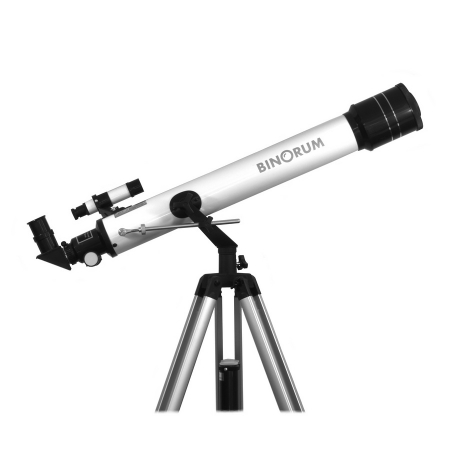
3x Barlow Lenses - Powerful Tool for Astronomy
3x Barlow lenses represent highly specialized optical elements that significantly expand the capabilities of your telescope. These lenses triple the focal length of the primary objective, allowing for much higher magnifications when observing distant objects. Thanks to their construction, they are ideal for detailed study of planets, lunar craters, and double stars. 3x Barlow lenses are a popular choice among astronomers who seek a compromise between performance and practical use. Their compact design makes them an essential accessory for any serious observer looking to maximize their equipment's potential.
Specialized for Astrophotography and Observation
While Barlow lenses are suitable for visual observation, they show their greatest potential in astrophotography. The 3x magnification allows photographing smaller objects with greater detail, which is invaluable when imaging planets or lunar features. High-quality optics of these lenses minimize chromatic aberrations and maintain sharpness across the entire field of view. This results in images with significantly higher quality than when using standard telescope configurations. For astrophotography, these lenses represent an economical alternative to purchasing additional eyepieces with shorter focal lengths. They also provide consistent magnification across different eyepiece combinations.
Technical Properties and Limitations
When using 3x Barlow lenses, it's important to consider certain technical limitations. Significant magnification causes considerable narrowing of the field of view, which can make orientation in the sky and finding observed objects more difficult. Simultaneously, image dimming occurs as available light is spread over a larger area. Therefore, it's necessary to have a sufficiently high-quality telescope with a larger objective diameter that can capture enough light. 3x Barlow lenses require stable mounting and calm atmospheric conditions for optimal results. At high magnification, even the smallest vibrations and atmospheric turbulence become apparent. Proper collimation of the telescope becomes even more critical when using these powerful magnification tools.
Selection and Compatibility
When selecting 3x Barlow lenses, their compatibility with your telescope and eyepieces is crucial. Most modern lenses use standard diameters of 1.25″ or 2″, ensuring wide compatibility across different telescope systems. Quality Barlow lenses are equipped with multi-layer anti-reflective coatings that minimize light loss and increase image contrast. Some models offer the possibility of fine-tuning magnification by changing the distance from the eyepiece. For both beginners and advanced astronomers, these lenses represent an excellent investment that significantly expands the possibilities of existing equipment without the need to purchase expensive specialized eyepieces.
Maintenance and Care
Proper maintenance of 3x Barlow lenses is essential for preserving their optical performance over time. Regular cleaning of lens surfaces using appropriate optical cleaning solutions and lint-free cloths helps maintain image clarity. Storage in protective cases prevents dust accumulation and potential damage during transport. Temperature acclimation before use prevents condensation formation on optical surfaces. Quality Barlow lenses are built to last decades with proper care, making them a worthwhile long-term investment for serious astronomers.
Applications in Different Astronomical Fields
3x Barlow lenses find applications across various astronomical disciplines, from planetary observation to deep-sky imaging. They excel in lunar photography, where the increased magnification reveals intricate surface details and crater formations. Solar observation, when combined with proper filters, benefits from the enhanced magnification for sunspot and solar granulation studies. Variable star monitoring and double star separation also benefit from the increased resolving power these lenses provide. Their versatility makes them suitable for educational purposes, research applications, and recreational astronomy alike.