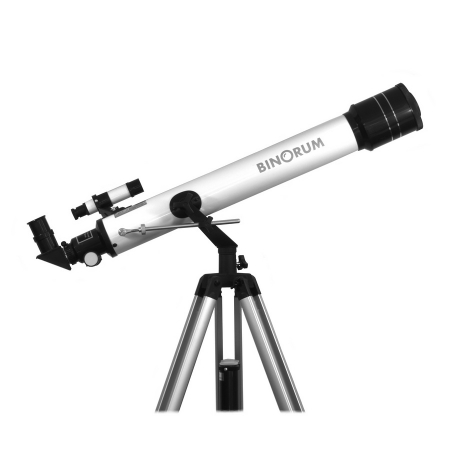
The Proven Classic of Astronomy
Plössl eyepieces have been among the most popular and versatile optics in astronomy for over 170 years. This time-tested four-element optical design offers an excellent balance between optical quality, price, and practicality. For millions of astronomers worldwide, Plössl eyepieces are both the first choice and often the final choice.
Why Are Plössl Eyepieces So Popular?
Universal Application: Plössl eyepieces work exceptionally well with virtually all telescope types – refractors, reflectors, and catadioptric systems. They deliver sharp images whether observing planets or tracking deep-sky objects.
Excellent Optical Quality: The four-element construction (two achromatic doublets) ensures sharp, bright images with minimal aberrations. Fully Multi-Coated (FMC) anti-reflection coatings on all optical surfaces maximize light transmission and contrast.
Comfortable Field of View: With a 50-52° apparent field of view, Plössl eyepieces offer comfortable viewing that's wider than simpler designs (Kellner, Orthoscopic) but not as extremely wide as premium ultra-wide eyepieces. This range is ideal for most astronomical observations.
Affordable Pricing: Thanks to the proven design and efficient manufacturing, Plössl eyepieces deliver professional quality at reasonable prices. They're an ideal choice for beginners and as additions to experienced observers' collections.
Super Plössl - Enhanced Classic
Super Plössl eyepieces represent a modernization of the classic design with several improvements:
Greater Eye Relief: Longer distance between eye and eyepiece ensures more comfortable viewing, especially for eyeglass wearers. Short focal lengths (under 10mm) have very limited eye relief in standard Plössl designs – Super Plössl addresses this.
Better Aberration Correction: Additional optical elements or improved construction minimize unwanted optical defects, particularly at field edges.
Higher Contrast: More advanced anti-reflection coatings and better control of scattered light provide more contrasty images.
What Observations Are Plössl Eyepieces Ideal For?
Planetary Observation
Short focal length Plössl eyepieces (4-10mm) provide the high magnification needed for detailed views of Jupiter's bands, Saturn's rings, Mars's polar caps, or lunar craters. Sharp images and good contrast reveal fine structures on planetary disks.
Lunar Observation
Medium focal lengths (10-25mm) are perfect for exploring the Moon's surface. You see sufficient crater detail, mountain ranges, and maria, while a reasonable area fits in the field for comfortable viewing.
Deep-Sky Objects
Longer focal lengths (25-40mm) provide lower magnification and wider true fields, ideal for extensive star clusters, large nebulae, and galaxies. Good contrast brings out details even in fainter objects.
Object Location
A long focal length Plössl (32-40mm) is an invaluable tool for finding objects via "star hopping." The wide true field shows enough stars for navigation, while sufficient magnification reveals fainter targets.
Available Focal Lengths
Plössl eyepieces are available in a wide range of focal lengths, typically:
1.25" (31.7mm) Format:
- 4mm - high magnification for planets
- 6mm - planetary detail
- 9mm - universal medium-high magnification
- 12.5mm - all-purpose use
- 15mm - medium magnification
- 20mm - lower magnification, wider field
- 25mm - finding and wider objects
- 32mm - maximum for 1.25" format
2" (50.8mm) Format:
- 32mm - wide true field
- 40mm - maximum for most 2" focusers
- 50mm+ - special applications for fast telescopes
How to Choose the Right Focal Length
Basic Rule: Magnification = Telescope Focal Length ÷ Eyepiece Focal Length
Example: 1000mm telescope with 25mm eyepiece = 40× magnification
Recommended Magnifications:
• Low power (25-50×): Finding, extended objects, orientation
- Medium power (50-150×): Moon, bright clusters, most deep-sky
- High power (150-250×): Planets, double stars, lunar detail
- Very high power (250×+): Only in excellent conditions, planetary detail
Maximum Useful Magnification: Approximately 2× the objective diameter in millimeters. For a 150mm telescope, that's 300×.
Building a Quality Eyepiece Set
An ideal collection contains at least three eyepieces covering different magnifications:
Basic Set (3 eyepieces):
- Long focal length (25-32mm): Finding, wide field, orientation
- Medium (12-15mm): Universal observing, Moon, bright objects
- Short (6-9mm): Planets, double stars, high detail
Expanded Set (5+ eyepieces):
Add intermediate focal lengths for finer magnification selection based on specific objects and conditions.
Plössl vs. Premium Wide-Angle Eyepieces
Choose Plössl when:
- You want quality optics at reasonable cost
- 50-52° field of view is sufficient for you
- Building basic or universal eyepiece collection
- Using various telescopes and need compatibility
- You're a beginner wanting proven classics
Consider wide-angle when:
- You want immersive "walk in space" experience
- 70-100° field of view is your priority
- Observing primarily deep-sky objects
- You have budget for premium eyepieces
- Seeking ultimate viewing comfort
Compatibility and Connections
Standard 1.25" barrel: Most Plössl eyepieces use the universal 1.25" (31.7mm) barrel fitting practically all modern telescopes. Filter threads allow addition of lunar, planetary, or deep-sky filters.
2" format: Longer focal lengths (32mm+) are available in 2" format providing wider true fields. Most 2" eyepieces include adapters for use in 1.25" focusers.
Eyepiece Care
Plössl eyepieces last decades with proper care:
- Use lens caps when eyepiece not in use
- Clean lenses only with special optical cloths
- Store in dry environment, ideally in case
- Avoid finger touches on optical surfaces
- Regularly check tightness of eyecups and components
Why Choose Plössl Eyepieces
In an era of advanced optical designs, Plössl eyepieces might seem old-fashioned. But their popularity isn't accidental – this design achieved nearly perfect balance between optical quality, practicality, and price.
For beginning astronomers, they offer an excellent introduction to quality optics without major investment. For experienced observers, they represent reliable working tools that simply perform. And for all astronomers, they prove that sometimes a classic is classic precisely because it's the best.
Explore our collection of Plössl and Super Plössl eyepieces and discover why these classic eyepieces remain the most popular choice for astronomers worldwide.