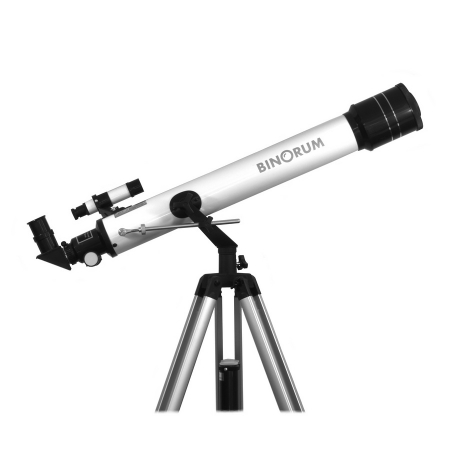
Telescope Filters – See the Universe Like Never Before
Imagine revealing celestial details invisible to the naked eye. Astronomical filters are the secret weapon that separates casual stargazers from serious observers. With the right filter, you'll see structures, colors, and features that would otherwise remain hidden – transforming your telescope into a far more powerful instrument.
Why Filters Are a Game-Changer
Your eyes and telescope can only see what light reveals. But not all light is helpful – some obscures details, washes out contrast, or overwhelms delicate features. Filters work like precision tools, blocking unwanted wavelengths while allowing crucial light to pass through. The result? Dramatically improved image quality, enhanced contrast, and details you never knew existed.
Professional observatories use filters for a reason: they work. Now you can harness that same technology to revolutionize your backyard astronomy.
The Right Filter for Every Target
Moon Filters – Tame the Glare, Reveal the Details
The Moon is spectacular, but its brightness can be overwhelming, causing eye fatigue and washing out subtle details. A quality moon filter reduces glare by 70-90%, making lunar observation comfortable and revealing incredible surface features.
What you'll see with a moon filter:
- Razor-sharp crater walls and central peaks
- Delicate ray systems extending across maria
- Subtle color variations in different geological regions
- Fine details in the terminator (day/night boundary)
- Comfortable viewing without squinting or eye strain
Available in neutral density (variable transmission) and polarizing versions for maximum flexibility.
Solar Filters – Safely Observe Our Star
CRITICAL SAFETY NOTE: Never look at the Sun through a telescope without proper solar filtration – you will cause permanent, instant eye damage. Our solar filters provide 100% safe viewing of the Sun.
With a certified solar filter, you can safely observe:
- Sunspots and their evolution over days
- Solar granulation (the Sun's "boiling" surface)
- Faculae (bright active regions)
- Solar eclipses in stunning detail
- Planetary transits across the Sun's disk
We stock full-aperture solar filters (mount on the front of your telescope) and specialized H-alpha filters for viewing solar prominences and surface details.
Light Pollution Filters – Reclaim Dark Skies
Living in or near a city shouldn't mean giving up deep-sky observation. Light pollution filters are your solution, blocking the specific wavelengths emitted by streetlights and artificial lighting while allowing crucial nebula emissions to pass through.
CLS (City Light Suppression) Filters: Broad-spectrum filters that improve contrast on nebulae, galaxies, and star clusters by blocking common light pollution wavelengths. Perfect for urban and suburban observers.
UHC (Ultra High Contrast) Filters: More selective than CLS filters, UHC filters dramatically enhance emission nebulae by isolating H-beta and OIII wavelengths. Turn faint nebulae into prominent objects, even under light-polluted skies.
The transformation is stunning: Objects that were barely visible become clearly defined. Details emerge from the background glow. Your city location becomes far less of a limitation.
Narrowband Filters - Specialized Deep-Sky Performance
For the ultimate in nebula observation and astrophotography, narrowband filters isolate specific emission lines:
OIII (Oxygen-III) Filters: Reveal planetary nebulae and supernova remnants with unprecedented clarity. The Veil Nebula, Ring Nebula, and Dumbbell Nebula become absolutely spectacular through an OIII filter.
H-alpha Filters: Isolate the red emission from hydrogen, making emission nebulae pop against the background. The Orion Nebula, Lagoon Nebula, and North America Nebula show incredible structure and detail.
H-beta Filters: Specialized filters for specific nebulae like the Horsehead Nebula and California Nebula that emit strongly in the H-beta wavelength.
These filters work in both visual observation and astrophotography, offering versatility for serious astronomers.
Planetary Filters - Enhance Surface Details
Planets reflect sunlight unevenly across different wavelengths. Color filters enhance specific features by blocking competing wavelengths:
For Jupiter:
- Light Blue (#82A): Enhances cloud bands and zones
- Orange (#21): Improves contrast of Great Red Spot
- Methane Band: Reveals high-altitude cloud features
For Mars:
- Red (#23A, #25): Enhances surface features and polar caps
- Blue (#80A): Reveals clouds, dust storms, and atmospheric phenomena
- Yellow (#12): Good all-around contrast enhancement
For Saturn:
- Light Blue (#82A): Enhances cloud belts and ring detail
- Yellow-Green (#11): Improves overall contrast
For Venus:
- Deep Blue (#47): Makes atmospheric cloud patterns visible
- UV filters: Reveal cloud structure invisible in visible light
Planetary filters are affordable and make a dramatic difference in what you can see and photograph.
Variable Polarizing Filters - Universal Glare Control
Continuously adjustable neutral density filters that let you dial in the perfect brightness reduction for any object. Excellent for the Moon, bright planets, and even double stars where brightness differences make observation difficult.
Understanding Filter Technology
Transmission Curves Matter
Not all filters are created equal. Quality filters use precision optical coatings with sharp transmission curves – they block exactly what needs blocking and transmit exactly what needs transmitting. Cheap filters use colored glass that blocks wavelengths indiscriminately, reducing image quality.
Our filters feature:
- Multi-layer interference coatings for precise wavelength control
- High transmission in passband (minimal light loss)
- Steep blocking curves for maximum contrast
- Anti-reflection coatings to prevent ghosting
- Precision-ground optical glass substrates
Filter Sizes: 1.25" and 2"
Most filters are available in standard 1.25" and 2" threaded formats that screw directly into your eyepieces or camera adapters. Make sure to check your equipment's threading before ordering.
Some filters (particularly full-aperture solar filters) are custom-sized to fit over your telescope's objective lens or aperture.
Visual vs. Photographic Use
Many filters work brilliantly for both visual observation and astrophotography:
Visual use: Filters screw into eyepieces, instantly transforming what you see. No cameras, computers, or processing required – just look and enjoy dramatically improved views.
Astrophotography: The same filters attach to camera adapters, allowing you to capture images with enhanced contrast and detail. Narrowband filters are particularly popular for imaging emission nebulae, even under light pollution.
Some photographers use filter wheels to quickly switch between multiple filters during an imaging session, or clip-in filters that mount inside DSLR cameras.
Building Your Filter Collection
You don't need every filter immediately. Here's our recommended acquisition path:
Beginner essentials:
- Moon filter (your most-used filter)
- Solar filter if you plan to observe the Sun
- Light pollution filter if you're in/near a city
Intermediate additions:
- UHC or OIII filter for nebulae
- Planetary filter set (#12, #21, #23A, #80A, #82A)
Advanced specialization:
- H-alpha filter for emission nebulae
- H-beta for specific targets
- Photometric filter sets for scientific work
- Specialized filters for your favorite targets
The Difference Is Immediate and Obvious
One of the beautiful things about filters is that their effect is instant and undeniable. The moment you screw a UHC filter into your eyepiece and look at the Orion Nebula, you'll understand. When you add a moon filter and suddenly see intricate crater details without squinting, you'll wonder how you ever observed without it.
Filters don't require skill to use, expensive equipment, or perfect conditions. They simply work, immediately improving your views every single time you observe.
Investment in Quality
Like eyepieces, quality filters are lifetime investments. They work with every telescope you'll ever own (as long as sizes match), never become obsolete, and maintain their performance indefinitely with basic care.
We stock filters from the world's most respected optical manufacturers – brands used by professional observatories, research institutions, and serious amateur astronomers worldwide. Every filter is precision-manufactured and quality-tested.
Expert Guidance Available
Choosing the right filter depends on your equipment, observing location, and targets of interest. Our experienced astronomy team is here to help:
- Which light pollution filter is best for your location?
- Should you start with UHC or OIII for nebulae?
- Which planetary filters work best for your telescope's aperture?
- How do you use filters for astrophotography?
We've helped thousands of astronomers select the perfect filters. We'll ask the right questions and recommend exactly what you need – nothing more, nothing less.
See What You've Been Missing
Your telescope gathers light. Your eyepieces magnify it. But filters refine it, removing noise and enhancing signal to reveal the universe's hidden beauty. They're not optional accessories – they're essential tools that unlock your telescope's full potential.
Browse our complete collection of astronomical filters and discover what professional observers have known for decades: the right filter doesn't just improve your views – it transforms them completely.
Start seeing more tonight. Add the filters that will revolutionize your astronomy.
Premium optical coatings • Precision wavelength control • Compatible with all major telescope brands • Expert advice always available • 14-day satisfaction guarantee