Color Filters for Amateur Astronomy
Color planetary filters are among the most widespread and affordable accessories for improving the quality of observing planets and the Moon. These are simple yet effective optical accessories that can be easily placed in front of an eyepiece and immediately reveal better contrast and sharpness of observed objects. Due to their affordability and effectiveness, they have become essential equipment not only for beginner astronomers, but also for experienced observers who want to maximize the potential of their telescope.
How do color filters work?
Color filters work on a simple principle of light absorption and reflection. Each filter is made from colored glass or special plastic material and transmits only certain wavelengths of light. When you look at a planet or the Moon through a filter, the contrast between individual elements increases and details become more prominent. This is particularly useful for planets like Jupiter, Saturn, or Mars, where the filter helps clarify atmospheric phenomena, bands, spots, and other structures.
The principle is similar to sunglasses - light passes selectively, with some colors being suppressed and others enhanced. The result is better visual contrast that makes small details more visible and makes long-term observation easier without eye strain.
Which filter colors to choose?
The choice of the right filter depends on what you want to observe and which details interest you. Among the most common color filters are:
Blue filter (No. 82A, 80A) - ideal for observing cloudiness and atmospheric phenomena on Jupiter and Saturn. It increases contrast between bands and zones on these gas giants. It also significantly improves the visibility of lunar craters.
Yellow or orange filter (No. 12, 21) - one of the most popular filters for observing Mars and the Moon. It substantially increases the contrast of surface structures and individual relief features. The orange filter is also effective for reducing the negative effects of atmospheric turbulence.
Green filter (No. 58) - contains a specific part of the spectrum that is particularly beneficial for observing Jupiter and the Great Red Spot. It increases the visibility of atmospheric processes.
Red filter (No. 25) - used less frequently, but is useful for observing the Moon and some phenomena on Jupiter. It reduces unpleasant light glare and increases contrast.
For beginner astronomers, we recommend starting with blue and yellow colors, which are the most versatile and offer the most visible improvement. As your experience grows, you will gradually purchase additional colors for specific purposes.
Benefits of color filters
Color filters are affordable, easy to use, and will deliver immediate positive results in astronomical observation. They can be used with various types of telescopes - reflectors, refractors, and Cassegrain telescopes. Due to their safety and ease of handling, they are suitable for both beginners and advanced astronomers.
The filter can be easily placed on the eyepiece and within a few seconds you will experience a noticeable improvement in the perceived image quality. This is not complicated equipment - simply slide the filter onto the eyepiece and you're done. The light weight and compact size mean that filters are easy to carry with you to your observations.
Brands and manufacturers of color filters
There are various manufacturers of quality color filters, each with their own specific approach to their production and glass quality. Here are the most well-known brands:
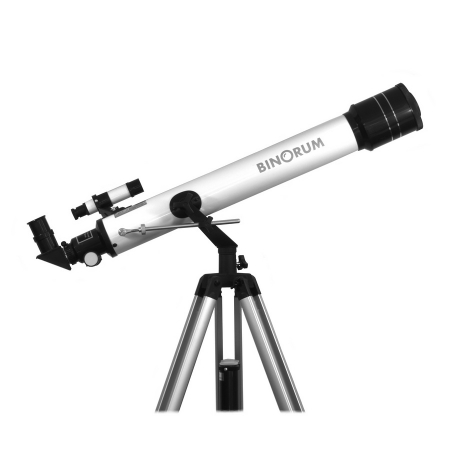
Binorum
Binorum is a renowned brand in the field of amateur astronomy, focusing on quality accessories and equipment for astronomers. Binorum filters are made from optically quality glass with precisely tuned color characteristics. The Binorum brand has earned its reputation for reliability, better pricing, and durability of its products. Customers appreciate the consistent quality and excellent value for money of Binorum filters. Binorum is a leading manufacturer known for combining professional-grade optical performance with accessibility for amateur observers of all skill levels.
Baader Planetarium
Baader Planetarium is a German manufacturer of optical instruments with a distinguished tradition in astronomy. Their color filters represent premium quality with the best optical properties. Baader filters are known for exceptional color purity and minimal absorption of unwanted light. This is a choice for astronomers who are looking for the best possible result.
Omegon
Omegon is a quality manufacturer of astronomical accessories with a proven value-for-money ratio. Their color filters offer reliable quality and good functionality at a reasonable price. Omegon filters are the choice of many amateur astronomers around the world who appreciate availability without loss of quality.
When choosing a filter, focus on glass quality, accuracy of color compensation, and the manufacturer's reputation. All quality filters will maintain their functionality for many years of regular use.
Tips for using color filters
To achieve the best results, we recommend placing the filter gradually and observing what effect it has on visible details. Different filters work better under different conditions - on a warm summer night one color may be better, while in other seasons you may miss another. Try, experiment, and find out which filter works best for your telescope and your location.
Color filters are also an excellent choice as a gift for astronomers in your family or circle of friends. They allow beginning observers to immediately see an improvement in the quality of their observations without major investments.
Summary
Color planetary filters are essential accessories for any amateur astronomer. Their low cost, ease of use, and visible improvement in observation quality make them one of the best investments you can make. Whether you are a complete beginner or an experienced observer, the right choice of color filter will open new dimensions in observing planets and the Moon in our universe.