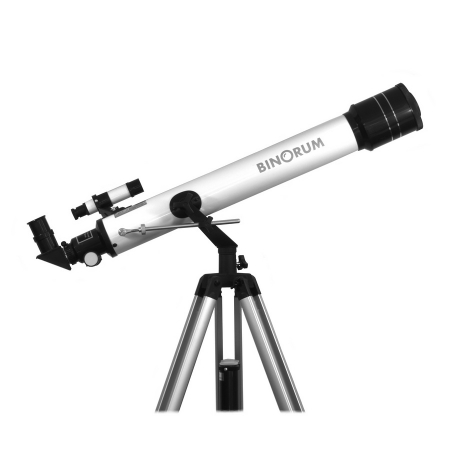
Solar Telescopes for Safe and Detailed Sun Observation
The Sun is the closest star to Earth and one of the most rewarding targets for amateur astronomers. Solar telescopes are purpose-built instruments that let you observe sunspots, prominences, filaments, and chromospheric detail with full safety. Unlike standard telescopes, they incorporate dedicated filtration systems - H-alpha etalons, Herschel wedges, or calcium K-line filters - that reduce the Sun's intensity to a safe viewing level. Pointing an unfiltered telescope at the Sun even briefly causes permanent eye damage. Choosing the right solar telescope is therefore the first and most important decision for anyone interested in solar astronomy.
Types of Solar Telescopes and How They Differ
H-alpha telescopes are the most popular choice for solar observers. They isolate a narrow band around 656.3 nm, revealing the chromosphere in vivid red light - prominences arching from the solar limb, dark filaments crossing the disk, and active regions surrounding sunspot groups. Calcium K-line telescopes work in the ultraviolet range and highlight the chromospheric network and plage regions with exceptional contrast. Telescopes equipped with white-light glass or film filters show sunspot umbrae and penumbrae and are an accessible, cost-effective entry point for beginners. Each filtration type gives a genuinely different view of the same object, and many serious observers use more than one.
Key Parameters to Consider When Choosing a Solar Telescope
Aperture determines resolving power and the level of fine detail you can extract. For solar work, instruments ranging from 40 mm to 150 mm aperture cover most needs, from portable grab-and-go setups to high-resolution imaging rigs. The filter type defines what solar phenomena are visible at all. Bandpass width in H-alpha telescopes - measured in angstroms - directly affects contrast: a bandpass below 0.7 A reveals surface detail that wider-bandpass instruments simply cannot show. Mount quality matters too, since tracking the Sun smoothly for extended sessions or astrophotography demands a stable, well-engineered platform. The table below summarises the main parameters worth evaluating before purchase.
| Parameter | Description |
|---|
| Aperture |
40-150 mm for solar observation |
| Filter type |
H-alpha, Ca-K, glass white-light, film white-light |
| H-alpha wavelength |
656.3 nm |
| Mount type |
Altazimuth or equatorial |
| Focal length |
Typically 400-1200 mm |
Who Solar Telescopes Are Designed For
Solar telescopes for astronomers serve a wide range of users, from first-time observers to seasoned researchers. Beginners will find white-light film-filter setups and fixed-bandpass H-alpha instruments easy to use and immediately rewarding. Intermediate observers who want more surface detail often step up to a single-stack H-alpha telescope with a bandpass around 0.5-0.7 A. Advanced users and astrophotographers choose instruments with a tunable etalon that allows fine wavelength adjustment for maximum contrast on specific features. Solar telescopes are also a natural fit for astronomy clubs, school outreach events, and public star parties, where the Sun offers a daytime spectacle accessible to every visitor.
Accessories That Extend What You Can See
A solar telescope is only part of the observing system. A matched eyepiece set optimised for the instrument's focal ratio makes a clear difference in image sharpness and comfort during long sessions. Dedicated solar cameras and astro-imaging adapters let you record sunspot evolution over days or capture prominences in fine detail. A double-stack filter module - available for several H-alpha telescope models - narrows the bandpass further and dramatically improves chromospheric contrast. A sturdy equatorial or alt-azimuth mount with smooth slow-motion controls keeps the solar disk centred without constant manual correction.
Why Buy Your Solar Telescope From Our Store
Our catalogue includes a carefully selected range of solar telescopes from established manufacturers such as Lunt Solar Systems, Coronado, and Sky-Watcher. Every instrument we stock meets strict optical and safety standards before it reaches our shelves. Our specialists can help you match a telescope to your experience level, observing goals, and budget - whether you are taking your first look at a sunspot or planning a high-resolution imaging programme. We also carry the full range of compatible accessories: filters, mounts, eyepiece sets, and astrophotography adapters. Orders are dispatched promptly, and our team remains available for advice after your purchase.